
What We Do
What We Do
We correct spinal problems to remove nerve interference. This allows the body to relay it’s requirements more clearly to the brain.
Better communication between body and brain=better adaptation=better health.
It’s that simple!

What Lane Chiropractic has success with
- Lower Back Pain and Sciatica
- Neck Pain
- Migraine and Headache
- Vertigo
- Reflux
- Irritable Bowel Syndrome
- Bladder Control
- Constipation
- Breathing Problems like Asthma
- Fatigue

What to expect on your visit
- We are a results-based office.
- On your visit Dr Lane will conduct a consultation followed by a thorough orthopaedic, neurologic and chiropractic examination to see if chiropractic can help. Spinal scans will be taken to aid in diagnosis.
- If yours is a chiropractic problem Dr Lane can help. If not, he can’t but will find someone else who can. We work together with a large network of professional people who will see to your needs, and we can streamline things to ensure you are seen quickly.
- Xrays may be needed to see what needs to be done and these will be covered by Medicare for you.
- If we can help you, we will provide you with recommendations and leave no stone unturned to ensure good results.
- One size doesn’t fit all, and we know this, so our adjusting techniques include a large range to ensure your unique and individual needs are met.
Chiropractic: It's not complicated
Chiropractic developed on a simple philosophy.
Throughout life the body sends millions of requests to the brain every second. These signals travel along nerves and then the spinal cord. The brain receives them and orchestrates the cells of the body to respond for optimal health. Interference to these signals results in poorer health.
Chiropractors locate and correct (adjust) any subluxations (misalignments) of the 24 vertebrae to reduce interference to and from the brain.
Chiropractors turn the spinal switches back on so the body and brain can regain normal communication. Normal communication equals better health and function than abnormal communication.
Switch on – lights work. Switch off – darkness.
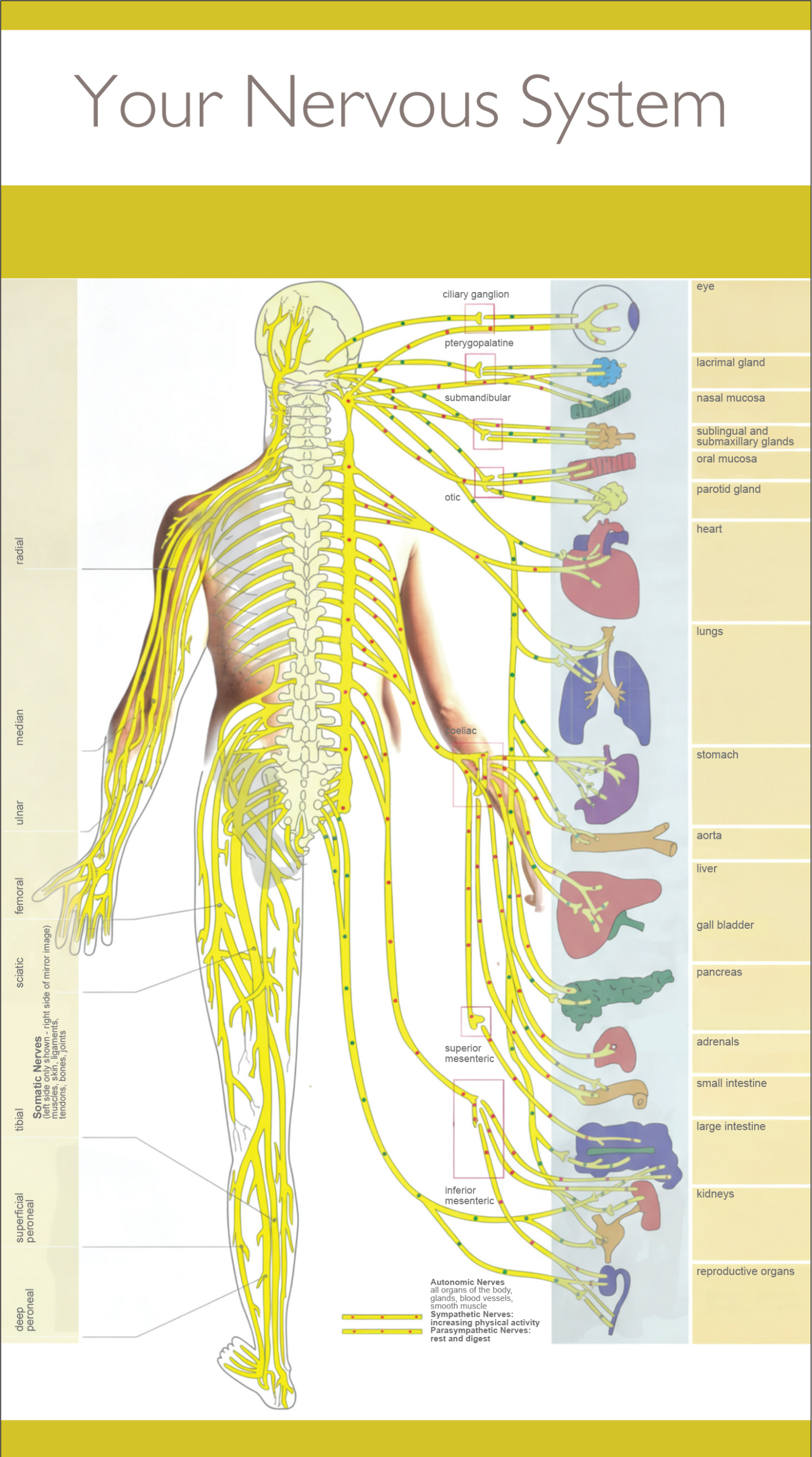
Research and clinical experience show us that normal movement and position of the vertebrae of the spine are affected by stress. Physical stress, emotional and mental stress cause the deep layers of spinal muscles to alter their normal habits and pull their attached vertebrae in directions and positions that alter normal brain function.
When the normal functions of the brain are altered its ability to guide us through life is diminished as it is not able to allow us to adapt to things happening to and around us.
How does this display itself? Poor adaptation to emotional stress creates cascades of normal hormones injected by our glands but at abnormal times and abnormal quantities. Depression, anxiety, obscure responses to others, altered sleep patterns and reduced ability to fight disease are the result.
Poor adaptation to mental stressors sets up patterns of brain connection (synapses) that alter well-adapted thinking patterns. Decisions, interpretations, concentration, brain nutrition and normal responses and reactions are altered.
Poor adaptation to physical stressors results in reduced healing times, susceptibility to infection, fatigue and reduced future function of both musculo-skeletal and visceral (organ and gland) parts of the body.
Regardless of a person’s vitamins, yoga, meditation, exercise or good food, we cannot be healthy without a properly functioning nerve system.